
Complete Guide · Cenote Diving in the Riviera Maya
A doorway into another world
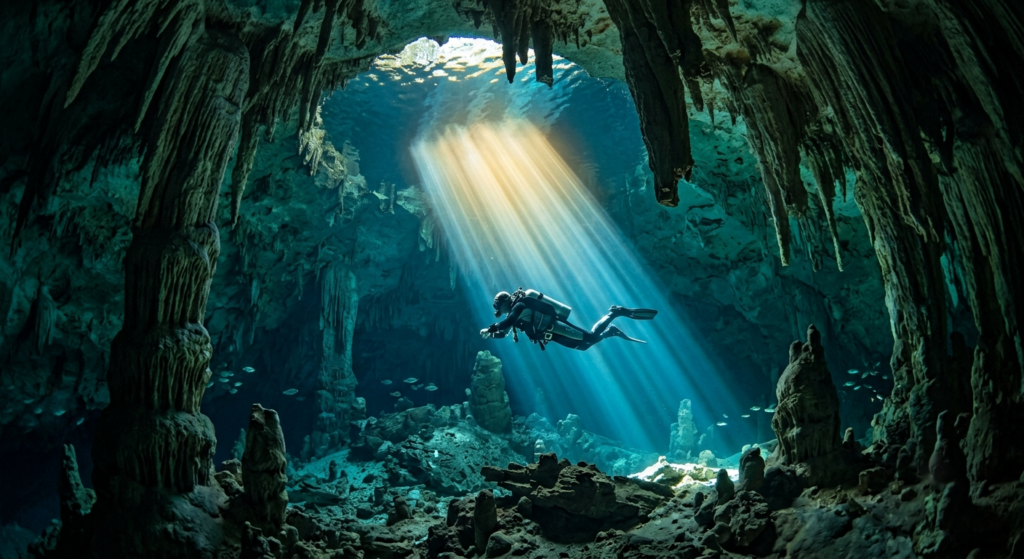
Imagine slipping beneath the surface of a still, glassy pool hidden in the jungle. The light fades, then suddenly returns in great cathedral beams that cut through water so clear it feels like floating in air. Stalactites hang above you. The world goes silent.
This is cenote diving, one of the most extraordinary underwater experiences on the planet, and the Riviera Maya is its global capital. Beneath this stretch of Mexican jungle lies one of the largest underground river systems on Earth, carved into limestone over millions of years.
In this guide you’ll learn what cenotes actually are, the crucial difference between cavern and cave diving, what to expect on your first dive, and the iconic systems that make this region a bucket-list destination for divers everywhere.
- A cenote is a natural sinkhole connected to underground freshwater rivers.
- Cavern diving (within the daylight zone) is open to certified Open Water divers with a guide; full cave diving requires technical training.
- Expect crystal-clear water, no currents, light beams and surreal rock formations.
- Water stays around 25°C all year, so a wetsuit keeps you comfortable.
What exactly is a cenote?
The word cenote comes from the Maya ts’onot, meaning “sacred well.” Geologically, a cenote is a natural sinkhole formed when the limestone bedrock collapses and exposes the groundwater beneath. The Yucatán Peninsula has no surface rivers; instead, rainwater filters through the porous rock and flows underground, creating thousands of interconnected caverns and tunnels.
For the ancient Maya, cenotes were far more than water sources. They were sacred portals to Xibalba, the underworld, and places of ritual and offering. Diving into one today still carries that sense of crossing a threshold into another realm.
Key fact: The Riviera Maya sits above some of the longest explored underwater cave systems on the planet, with hundreds of kilometres of mapped passages still growing every year.
Cavern vs cave diving: the difference that matters most
| Cavern diving | Cave diving | |
|---|---|---|
| Where | Within the daylight zone, near the exit | Deep into the overhead system, no daylight |
| Certification | Open Water diver + certified guide | Technical cave certification required |
| Exit | Natural light always visible | Reliant on guideline and lights |
| Best for | Most recreational divers | Trained technical specialists only |
Never enter the full cave zone without specific cave-diving certification, no matter how confident you feel. The vast majority of cenote experiences offered to recreational divers are cavern dives, always led by a trained guide following a permanent guideline.
What makes cenote diving unlike anything else
If you’ve only dived in the ocean, the first cenote will rewrite your idea of what diving can be:
- Impossible clarity: Filtered through rock, the freshwater can offer visibility of 100 metres or more. It feels like flying.
- Light beams: Where sunlight enters from above, it forms cinematic shafts of light that move as the sun shifts. Mornings are magic.
- The halocline: Where lighter freshwater meets denser saltwater, the water blurs like liquid glass. Passing through it is a surreal, dreamlike moment.
- Ancient formations: Stalactites and stalagmites that took millennia to form decorate the caverns like a frozen sculpture garden.
- Total calm: No waves, no current, no surge. Just stillness.
What to expect on your first cenote dive
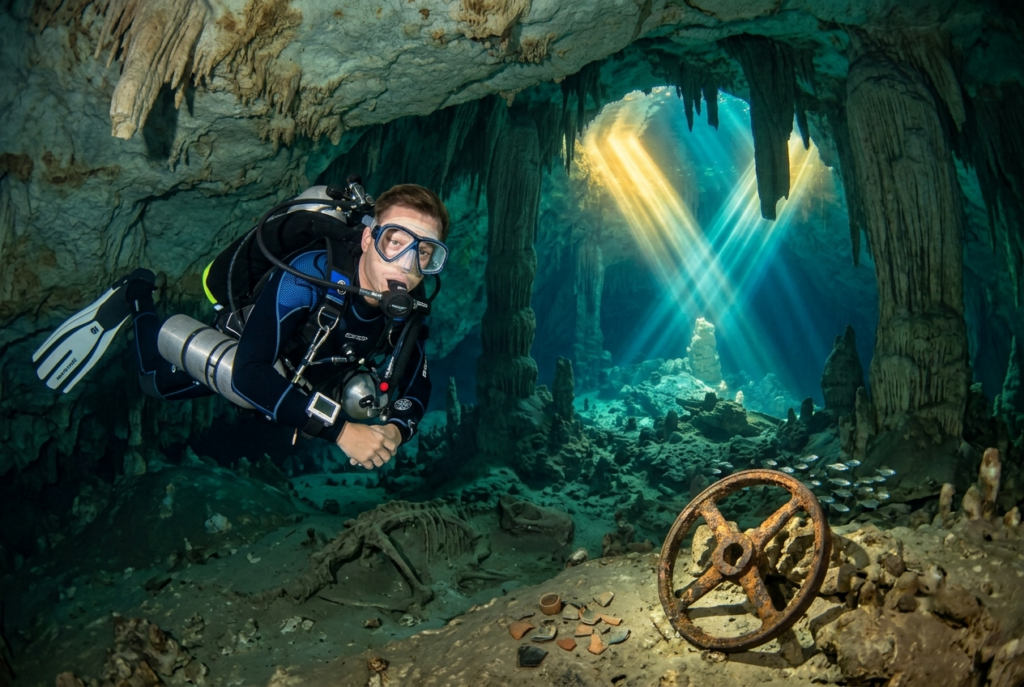
A cavern dive is calm and controlled, which makes it accessible even if you’ve only just earned your certification. You’ll be briefed thoroughly, then follow your guide along a fixed line, staying within the daylight zone at all times. Depths are usually modest, the pace is slow, and there’s plenty of time to simply hover and absorb the scene.
Because the water is cooler than the open sea, a wetsuit keeps you comfortable. Buoyancy control matters more than ever here: a single careless fin kick can stir up silt or damage formations that took thousands of years to grow.
Pro tip: Work on your buoyancy before you go. The divers who enjoy cenotes most are the ones who can hover motionless, breathe slowly and move with intention.
Iconic cenotes worth knowing
Each cenote has its own character. A few of the most celebrated:
- Dos Ojos: “Two Eyes,” famous for its bright, beginner-friendly caverns and stunning light.
- The Pit: A deep, dramatic shaft where light beams plunge into the blue; for more experienced divers.
- Gran Cenote: Crystal-clear and gentle, a favourite first cenote, with turtles and small fish near the surface.
- Angelita: Home to an eerie underwater “river” of hydrogen sulphide, a haunting sight for advanced divers.
- Casa Cenote: An open, mangrove-fringed channel where fresh and salt water mix and a resident crocodile sometimes makes an appearance.
Diving cenotes responsibly
These systems are fragile and irreplaceable. Protecting them is part of the privilege of diving them:
- Never touch formations; the oils on your skin can stop their growth permanently.
- Master your buoyancy to avoid stirring silt or contacting the cavern.
- Use only biodegradable, reef-safe products, and rinse off before entering.
- Always dive within your certification and follow your guide’s instructions.
Frequently asked questions
Do I need to be an experienced diver to dive a cenote?
No. Cavern dives within the daylight zone are open to certified Open Water divers accompanied by a trained guide. Full cave diving is a separate, advanced discipline that requires specific technical certification.
Is cenote diving safe?
Cavern diving with a qualified guide, within the daylight zone and your certification limits, is a controlled and very safe experience. The risk rises sharply only when divers venture into the cave zone without proper training.
How cold is the water?
Cenote water stays around 25°C year-round. A 3mm wetsuit is usually enough for comfort, though some divers prefer a little more for longer dives.
What’s the best time of day to dive a cenote?
For the famous light beams, late morning to early afternoon on a sunny day is ideal, when the sun is high enough to send light deep into the cavern.
A world that has been waiting millions of years
Cenote diving is less a sport than a pilgrimage. Few places let you float through crystal water, beneath beams of light, surrounded by formations older than civilization itself. It is humbling, peaceful and utterly unforgettable.
Master your buoyancy, respect the rock, and let the light lead the way: the Maya underworld rewards those who enter it with care.