
Complete Guide · Marine Life of the Mexican Caribbean
An ocean that is fully, vividly alive
Drop below the surface of the Mexican Caribbean and the first thing that strikes you is the colour. Electric blue tangs, golden coral, the flash of a silver barracuda, the slow shadow of a turtle drifting past. This is one of the richest marine environments on Earth, and it begins just metres from the shore.
The warm, clear waters off the Riviera Maya are part of the Mesoamerican Reef, the second-largest barrier reef system in the world. For divers, that means an extraordinary cast of characters waiting on every dive.
This guide is your field manual to that cast: the icons you’ll meet, the seasonal visitors worth planning a trip around, and how to share the water with them responsibly.
- The region sits on the Mesoamerican Reef, the world’s second-largest barrier reef.
- Sea turtles, rays, reef fish and nurse sharks are common year-round sightings.
- Some of the most spectacular species are seasonal, like bull sharks in winter.
- Good buoyancy and reef-safe habits keep both you and the reef healthy.
The reef that makes it all possible
Stretching more than 1,000 kilometres from the tip of the Yucatán down to Honduras, the Mesoamerican Reef is a living city of coral. Its nooks, walls and sandy channels create homes for hundreds of fish species, invertebrates, turtles and sharks. Along the Riviera Maya you can explore it on shallow reefs perfect for beginners and on dramatic drift dives in places like Cozumel.
Key fact: Coral reefs cover less than 1% of the ocean floor, yet they support roughly a quarter of all marine species. Every dive here is a visit to one of the planet’s great biodiversity hotspots.
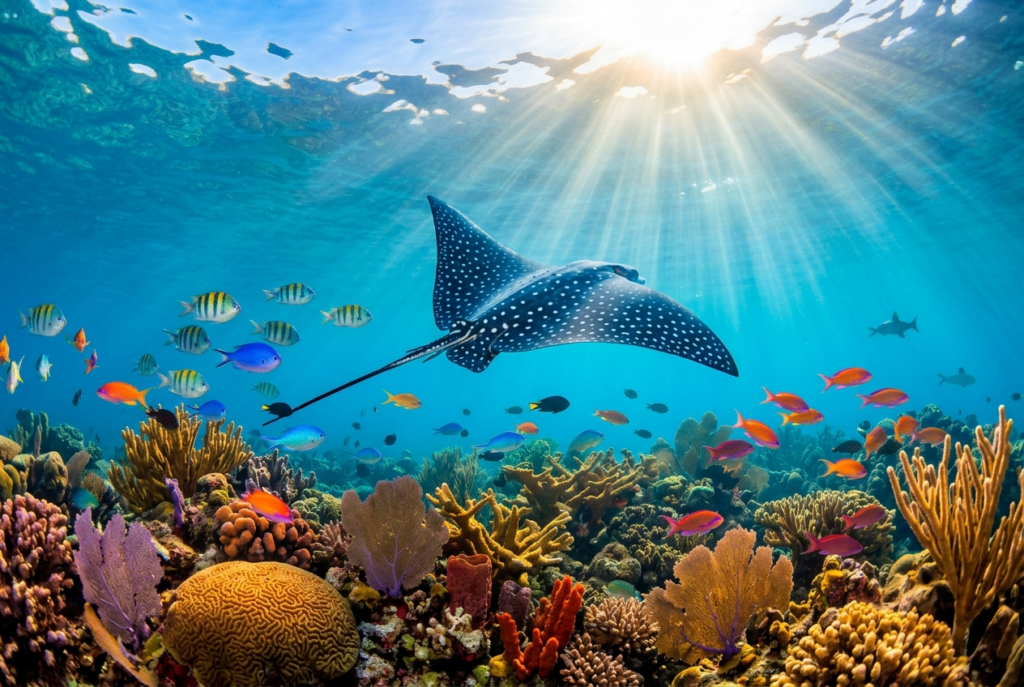
The icons you’ll likely meet
Some encounters are so common here they almost feel guaranteed. Get to know the regulars:
- Sea turtles: Green and hawksbill turtles graze the reefs and seagrass beds, often calm enough to watch from a respectful distance.
- Rays: Southern stingrays rest in the sand, while spotted eagle rays cruise the blue with extraordinary grace.
- Reef fish: Parrotfish, angelfish, sergeant majors, snappers and groupers paint the reef in constant motion.
- Nurse sharks: Docile and often resting under ledges by day, a gentle introduction to sharks for new divers.
- Moray eels: Peering from crevices, mouths opening and closing as they breathe, not aggressive despite the look.
- Barracuda and lobster: A silver sentinel hovering in open water and spiny lobsters tucked into the rocks.
Seasonal highlights, month by month
Part of the magic of the Mexican Caribbean is that the cast changes with the calendar. If a specific encounter is on your wish list, timing matters:
| Encounter | Best season | Note |
|---|---|---|
| Reef life & turtles | Year-round | Always present on the reefs |
| Bull sharks | Nov – Mar | Famous winter dives off Playa del Carmen |
| Whale sharks | Jun – Sep | Snorkelling encounters near Isla Mujeres / Holbox |
| Sailfish | Dec – Mar | Offshore snorkelling spectacle |
| Nesting turtles | May – Oct | Protected nesting season on the beaches |
Whale sharks and sailfish are protected and experienced by snorkelling, not scuba, to keep both divers and animals safe. Always choose operators who follow the established no-touch, no-chase guidelines.
Why the reef matters far beyond the dive
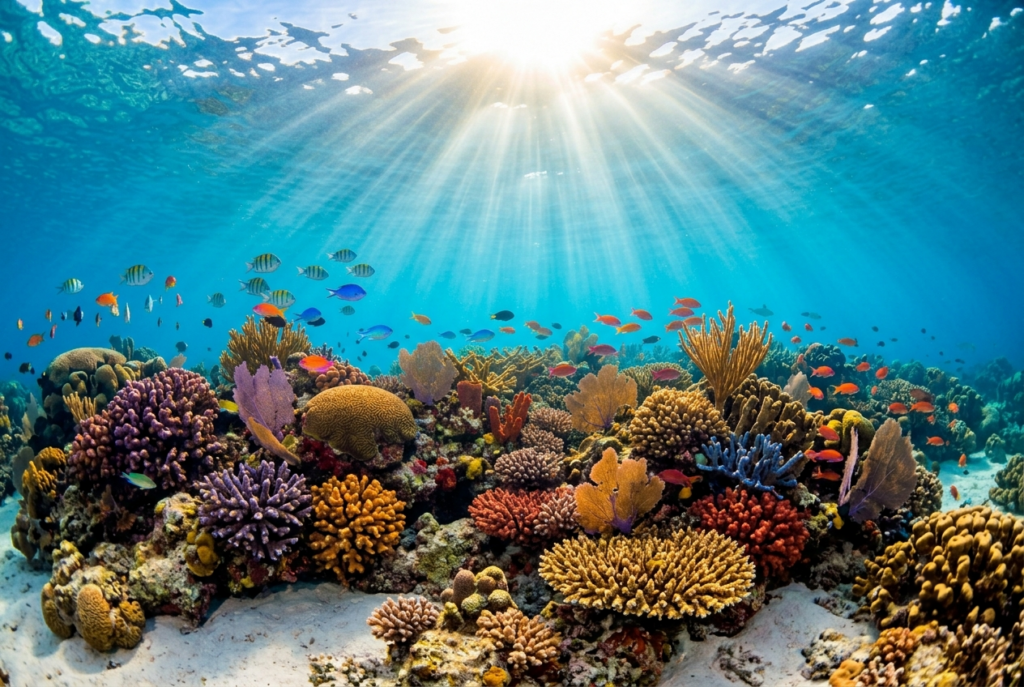
A coral reef isn’t a backdrop; it’s a finely balanced ecosystem. Corals are living animals that build limestone homes shared with algae, which feed them through photosynthesis. Fish clean the coral, predators keep populations in balance, and the whole system buffers the coastline from storms. When you understand how interconnected it all is, every sighting becomes more meaningful, and the case for protecting it becomes obvious.
Key fact: Warming water can cause coral bleaching, when stressed corals expel their algae and turn white. Responsible diving is one small but real way to reduce pressure on these reefs.
How to dive responsibly with marine life
- Look, don’t touch. Touching coral or animals can harm them and, in some cases, you.
- Perfect your buoyancy. Hovering well keeps you off the reef and protects fragile growth.
- Never chase or feed. Let animals approach on their own terms and keep their behaviour natural.
- Use reef-safe sunscreen. Common chemical filters are toxic to coral.
- Take only photos. Leave shells, coral and the reef exactly as you found them.
Frequently asked questions
What marine life can a beginner expect to see?
Even on a first dive, turtles, rays, parrotfish, angelfish and resting nurse sharks are common on the shallow reefs of the Riviera Maya.
Are the sharks here dangerous?
The species most divers encounter, such as nurse sharks and seasonal bull sharks, are not interested in people. Encounters are calm and, with experienced guides and proper protocols, very safe.
When is the best time to dive for marine life?
Reef life is rich year-round. For specific seasonal species, plan around the calendar: bull sharks in winter, whale sharks in summer.
Can I dive and snorkel for different species?
Yes. Reef and cenote species are best seen on scuba, while protected giants like whale sharks and sailfish are experienced by snorkelling.
Every dive is a different story
The marine life of the Mexican Caribbean is never quite the same twice. One day it’s a turtle drifting overhead, the next a wall of silver fish or the unmistakable silhouette of a shark in the blue. Learn the cast, dive with respect, and the reef will keep surprising you for a lifetime.
Slow down, watch closely and leave only bubbles: the more gently you dive, the more the ocean reveals.